by Alberto León, Carmen Torres Roman, Martha Madrigal Cervantes
Alberto León, Carmen Torres Roman, and Martha Madrigal Cervantes, descendants of Merced León, recall childhoods happily spent on Santa Barbara’s east side. Their homes, all within walking distance of each other, were located near Milpas, between the intersections of Yanonali and De La Guerra streets, though that area was later divided and some homes lost following the extension of the 101 freeway to Santa Barbara, starting in the mid-1930s, and other public construction projects in the 1960s and 70s.
The families enjoyed socializing together regularly, with special family gatherings for birthdays, holidays, graduations and other events. Children used the local streets and empty lots as informal playgrounds. Martha Madrigal Cervantes remembers neighborhood children stopping by her home for some of her mother’s sheet cake, which she made regularly as an after-school treat. Their homes were small but extended and upgraded as the families grew. Their yards were filled with fruits, vegetables and flowers; some kept small livestock, like chickens, ducks and rabbits. Carmen Torres Roman remembers a neighbor even offering his empty lot for her family’s Victory Garden during WWII. Both Carmen and Martha remember summers spent in fieldwork, traveling with their families along the farm labor circuit, northward and in the central valley, to pick fruits and vegetables and camping in tents–something that the children treated as a fun vacation.
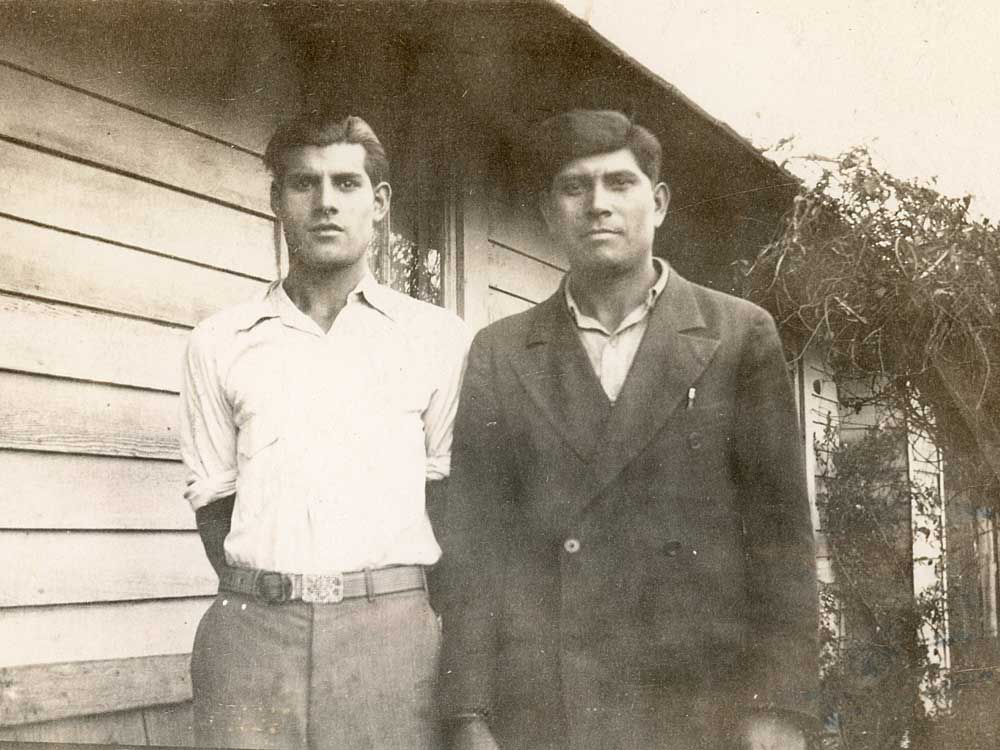
Alberto and his brother at 836 Laguna Street (Courtesy Alberto León)
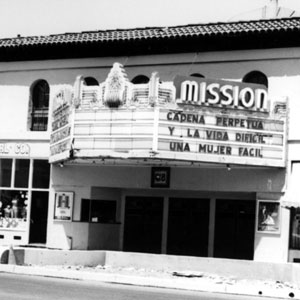
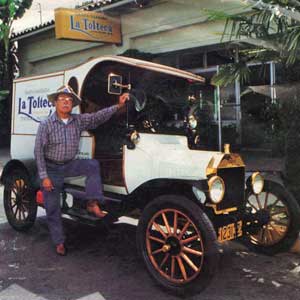
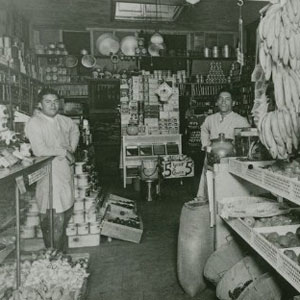
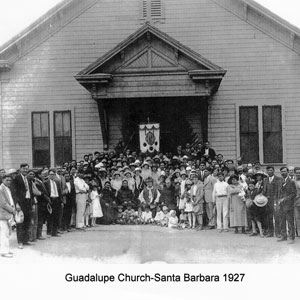
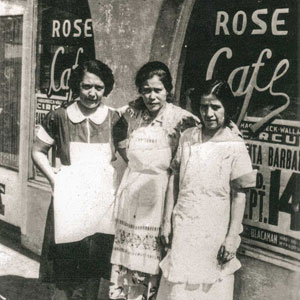
The neighborhood was also remembered for its diversity. Prior to the incarceration of Japanese Americans during WWII, Japanese American families were among their neighbors. Santa Barbara’s African American community also had homes in the area, with one family (the Murphys) remembered for the successful cheesecake business that they ran. The neighborhood’s demographic mix was reflected in its religious and commercial institutions. The neighborhood was anchored by several churches; to the east, on 925 Santa Barbara Street was the First Hispanic Baptist Church (established 1919). Closer to Milpas, was Our Lady of Guadalupe (established 1928) and, at Haley and Olive, St Paul’s African Methodist Episcopal Church (established 1903 and moved to Haley and Olive in 1906). Businesses like the Haley Street Cleaners, the Rose Café and La Tolteca tortilla factory, were other mainstays.
Originally part of the Cramer Tract in Carpinteria, Tijuana Road was once a hub of Mexican American families and businesses. Mexican barrios west of Linden Avenue were commonly referred to by nicknames and, in the case of Cramer Tract, locals long referred to it as Querétaro. Jim Campos describes periodic tardeadas (late afternoon fiestas with dancing and live music) held in an adjacent field and occasional circuses in the nearby pueblo viejo (Old Town).1 Late at night, teens with wheels sometimes screeched through the tract with car horns blaring, waking the neighborhood. Luckily, the neighborhood children were already tucked in their beds.
On weekends, the south side of the tract often served as an outdoor movie venue. The street was closed off to traffic, and the neighborhood brought out chairs to sit and watch the feature. A film projector, a big screen, and speakers provided the movie entertainment. Visitors from other barrios were welcomed in. Osuna’s Market, owned and managed by Ydelfonso and Flora Osuna, likely served as a concessions stand. Other amenities on Cramer Tract included a shoe repair shop and pool hall that were converted into Bob Garibay’s Garage.
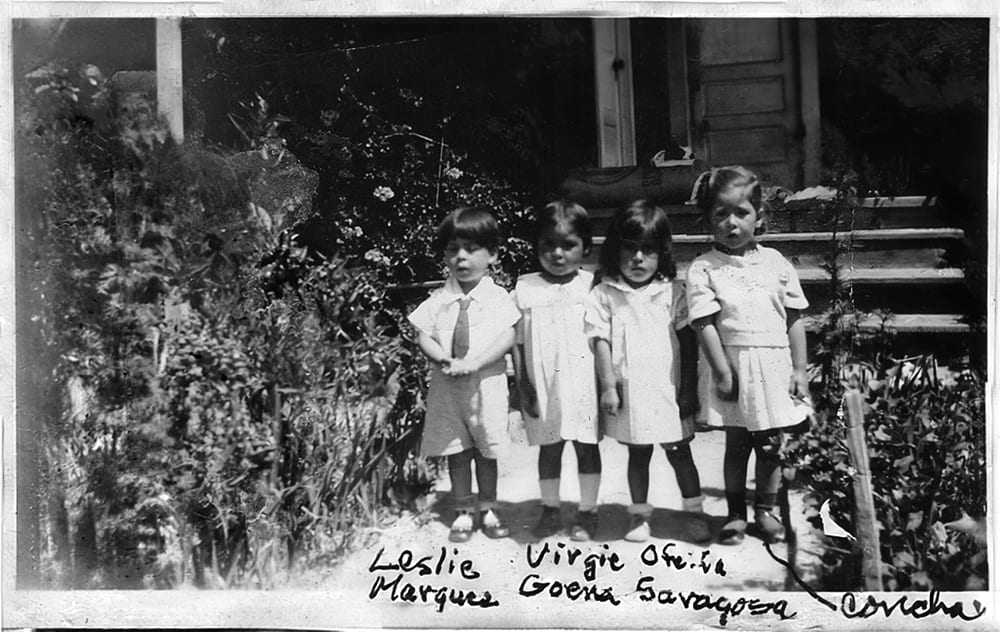
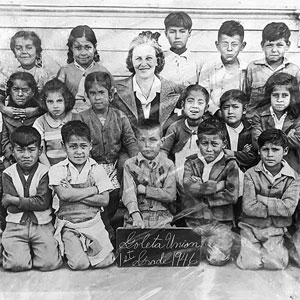
The children shown in the picture became important Carpinterians. Leslie became postmaster. Ofelia taught in the Carpinteria Unified School District until her untimely death. Virginia was a teller at the Security Pacific Bank for many years. Concha taught in the Santa Barbara School District for 40 years! As a child, Concha, whose full name is Concha Castillo Ordaz, remembers her parents discussing how the street she lived on was beginning to be called Tijuana Road, but the moniker did not stick. Cramer Tract was eventually stricken from the Carpinteria map because the 101 Freeway split the street into two parts in 1954-55. It became Cramer Road south of the freeway and Cramer Circle to the north of it.
1Excerpted from Jim Campos, “Clark’s 1940 Directory: Cramer Tract vs. Tijuana Road,” Coastal View News, January 15, 2025.
When Old Town Goleta was NEW…
by Teresa Newton-Terres
The Marine Corps Base was only a few blocks away (where the Santa Barbara Airport now stands). My dad, uncle, and their friends—mischievous kids with too much energy—loved sneaking over to play tricks on the Marines… and more than once, they almost got caught!
Hot rods ruled the roads! Diego S. Terres and his oldest son built a legendary roadster that often took the checkered flag on the drag strips—right where Santa Barbara Airport flights now take off.
My grandparents weekends included a trip down the Spanish-style stairs to Hollister Avenue and the Goleta Bakery next door. The climb back up those tile steps felt easy—especially with pastries in hand to sweeten the day!
Halloween had a special twist because Diego S. Terres, Sr.’s birthday fell the very next day, and he had “the buzzer.” That meant when a trick-or-treater rang the doorbell, the front door swung open—magically—from his upstairs apartment. We kids then had to climb the spooky, decorated Spanish-tile staircase to claim a prize: Grandmother’s legendary homemade caramel popcorn balls!
A box of See’s Candy was a precious treat! At Christmas, I joined my Grandmother, Marie Terres, in giving out boxes of See’s Candy and she let me have one piece from a box that lasted all Christmas.
Luau nights were common at the Terres home—seated in a circle on the floor, eating without utensils, and dancing with joy. The family had brought these traditions with them, learned during their journey from Spain to California by way of Hawaii’s sugar plantations.
We use cookies on our website to give you the most relevant experience by remembering your preferences and repeat visits. By clicking “Accept”, you consent to the use of ALL the cookies.
This website uses cookies to improve your experience while you navigate through the website. Out of these, the cookies that are categorized as necessary are stored on your browser as they are essential for the working of basic functionalities of the website. We also use third-party cookies that help us analyze and understand how you use this website. These cookies will be stored in your browser only with your consent. You also have the option to opt-out of these cookies. But opting out of some of these cookies may affect your browsing experience.
Necessary cookies are absolutely essential for the website to function properly. These cookies ensure basic functionalities and security features of the website, anonymously.
Cookie
Duration
Description
cookielawinfo-checkbox-analytics
11 months
This cookie is set by GDPR Cookie Consent plugin. The cookie is used to store the user consent for the cookies in the category "Analytics".
cookielawinfo-checkbox-functional
11 months
The cookie is set by GDPR cookie consent to record the user consent for the cookies in the category "Functional".
cookielawinfo-checkbox-necessary
11 months
This cookie is set by GDPR Cookie Consent plugin. The cookies is used to store the user consent for the cookies in the category "Necessary".
cookielawinfo-checkbox-others
11 months
This cookie is set by GDPR Cookie Consent plugin. The cookie is used to store the user consent for the cookies in the category "Other.
cookielawinfo-checkbox-performance
11 months
This cookie is set by GDPR Cookie Consent plugin. The cookie is used to store the user consent for the cookies in the category "Performance".
viewed_cookie_policy
11 months
The cookie is set by the GDPR Cookie Consent plugin and is used to store whether or not user has consented to the use of cookies. It does not store any personal data.
Functional cookies help to perform certain functionalities like sharing the content of the website on social media platforms, collect feedbacks, and other third-party features.
Performance cookies are used to understand and analyze the key performance indexes of the website which helps in delivering a better user experience for the visitors.
Analytical cookies are used to understand how visitors interact with the website. These cookies help provide information on metrics the number of visitors, bounce rate, traffic source, etc.
Advertisement cookies are used to provide visitors with relevant ads and marketing campaigns. These cookies track visitors across websites and collect information to provide customized ads.