
The Aliso School, Carpinteria
by Jim Campos
The Aliso School in Carpinteria was established in 1892 on Walnut Avenue, on the current site of the Veterans’ Memorial Building. A second school, Carpinteria Union, was established 20 years later, in 1912. Both schools served Carpinteria’s growing population, but in 1920, as the citrus industry expanded and Mexican-born agricultural workers were recruited, the Aliso School was designated for the children of those workers, with only a small number of Mexican-descended youth attending Carpinteria Union. Most of the children attending the Aliso School were U.S. citizens, having been born in the U.S.
Between 1920 and 1947, the Aliso School (first at its Walnut Avenue location and after 1935 at its Carpinteria Avenue/7th Street location) educated children from kindergarten through 8th grade.
Oral historical accounts from surviving students describe an under-resourced school with packed dirt floors that provided basic education with the intention of preparing students for labor in the citrus industry–picking fruit, packing, and processing. (See Voces de Old Town Carpinteria, 2023, dir. Brent Winebrenner.) The school also provided showers for those nearby residents, mainly Mexican American field workers, whose homes lacked indoor plumbing.
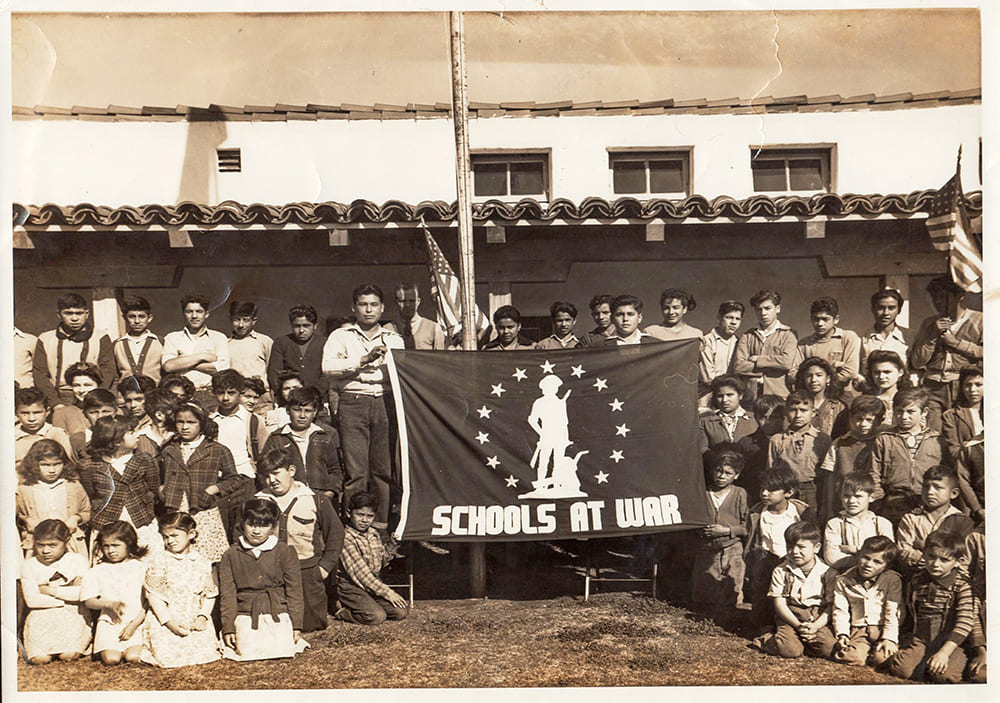
Aliso School during WWII. {Courtesy of Lawrence Cervantes)
The school-to-field pipeline was facilitated by local businesses, such as the Aliso Brand Lemon Corporation, an agricultural business operating citrus fields in the Carpinteria area, and C.D. Hubbard Fruit Company, one of the two local packing houses. The other, Carpinteria Mutual Citrus Association, maintained a whites-only employment policy that changed when labor shortages during WWII necessitated broader hiring.
The Aliso School’s closure came in 1947, following the Mendez et al. vs. Westminster et al. decision by the Ninth Circuit Court of Appeals, which banned Mexican-only schools in the state. It presaged the U.S. Supreme Court’s decision in Brown v. Board of Education of Topeka (1954) that found that separating students in public schools on the basis of race was unconstitutional, effectively banning racial segregation in public schools nationwide.
To observe the 75th anniversary of the Menendez decision, Carpinteria Cultural Foundation sponsored a mural project by artist MaryBeth Hanrahan that provides a visual rendering of the Aliso School’s place in Carpinteria’s history. The mural was christened on September 12, 2023.
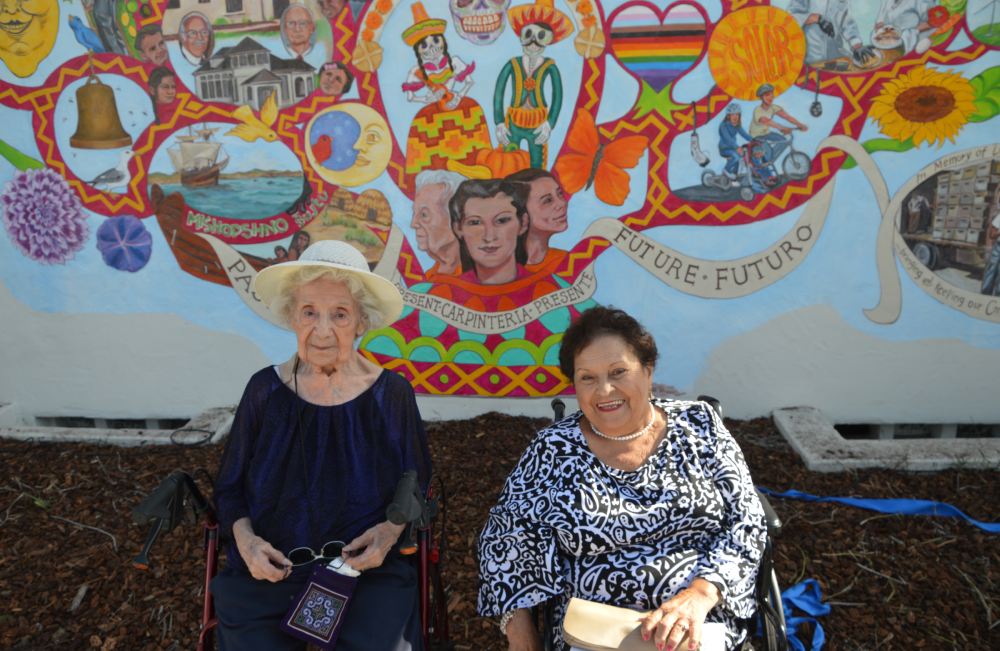
Josie Manriquez Villegas and Betty Bautista, former Aliso School students, in front of the Aliso School mural (Courtesy of Robin Karlsson)
Pictured in front of the mural, left to right, are Josie Manriquez Villegas and Betty Bautista, who are seated in front of their own vignette. Born in Carpinteria, Josie passed away on August 30, 2024, at the age of 104. She is featured prominently in the video Voces de Old Town Carpinteria. Betty created a preschool program in 1977 for the Carpinteria Unified School District, where the children were trained in the Spanish language to serve as a bridge for the learning of their second language, English. The program was featured in the Harvard Educational Review (April, 1986) and was lauded and recognized for excellence globally.
The achievement was remarkable in a community that was among the last to integrate its students racially in 1947, and where the penalty for speaking in Spanish was to have your mouth washed out with soap.