From Revolution to Reconciliation: A Goleta Circle Completed
by Margarita Martin del Campo
My story is one of two countries, two families, and a journey that inevitably led back to the shores of Santa Barbara. It begins in the turmoil of the Mexican Revolution and finds its resolution in the lemon groves of Goleta.
The Crossing
My maternal grandfather, Ignacio Gutierrez Carrillo, who was born in Rancho Estancia de San Nicolás, Jalisco, México, came to the United States not for adventure, but for safety. As a young man in Mexico during the Revolution, he was swept up by Pancho Villa’s army. He was a pacifist at heart, a young lad forced into a conflict where armed groups would raid ranchos and conscript boys who barely understood what they were fighting for. To escape the violence, he crossed the border, seeking a quiet life.
He found that life in the United States, where he met my grandmother, Petra Gutierrez Mendoza, was quite different from what he had experienced. Her own journey was born of tragedy. Born in San Diego de Alenjandría, Jalisco, México, during the chaos of the Revolution and orphaned by age thirteen, she survived abuse and heartbreak before being sent to live with family in the U.S. She arrived seeking work and safety, eventually finding both in Goleta.
Goleta: The First Chapter
My maternal grandparents, Ignacio and Petra, met and married here in Goleta, a place that would shape our family’s history. They raised four daughters—including my mother—and one son. They lived a humble but connected life, neighboring the García family—Benny and Carmen—in Goleta, surrounded by the lemon trees where my grandfather and my uncle worked. My grandmother, Petra, and my uncle Benny were cousins; their mothers were sisters. My mother, Margarita, and her siblings, Chuyita, Rosa, Tita, and Felipe, grew up alongside the eight García children: Benn, Gilberto, Raymond, Danniel, Ross, Gloria, Maria, and Irene.
However, the wider world encroached on their sanctuary. In 1942, when Japanese submarines shelled the Ellwood oil fields in Goleta, the war felt too close. My mother and her sisters could see the submarines from their school. Fearful for his family’s safety, my grandfather decided it was time to return to Mexico.
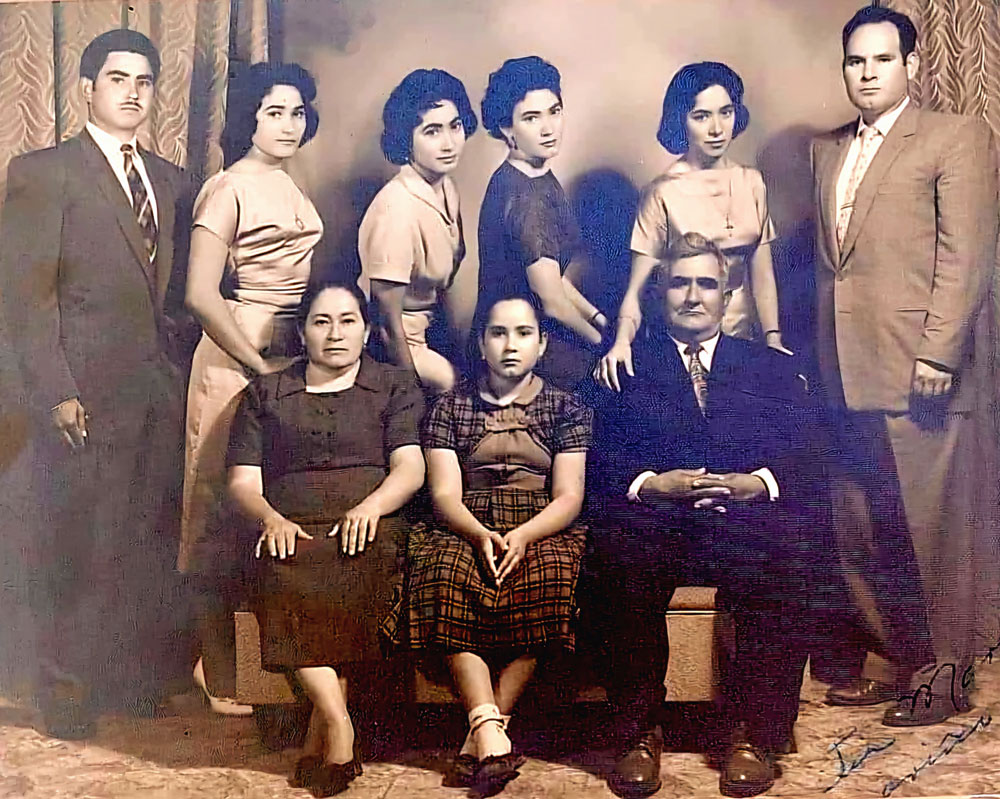
Margarita's Mother's Family - top left to right: Ignacio Gutiérrez Gutiérrez, Petra Gutiérrez Gutiérrez, Margarita Gutiérrez Gutiérrez (Margarita’s mother), María de Jesús Gutiérrez Gutiérrez and Felipe Gutiérrez
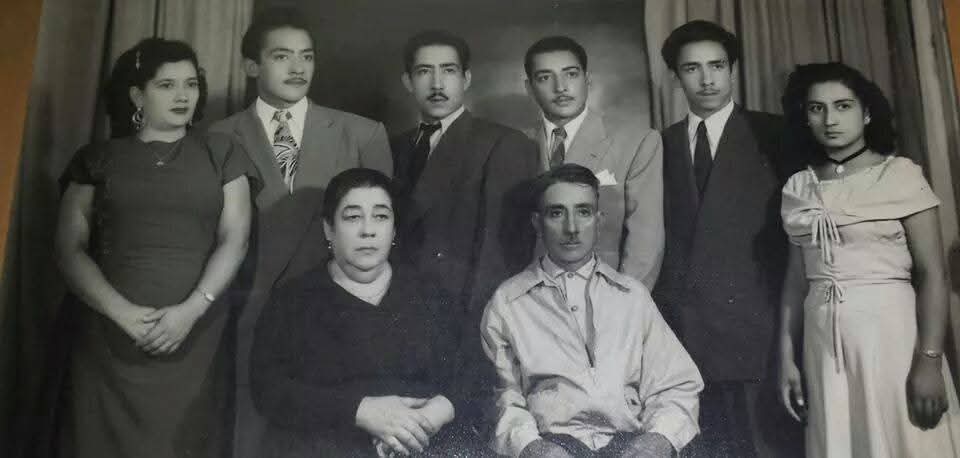
Margarita's Father's Family - top left to right: María Guadalupe González Godínez, Ramón González Godínez, Agustín González Godínez (Margarita’s father), and Irene González Godínez.
Roots and Resilience in Mexico
I was born in Mexico, the product of a family that valued education above all else. On my father’s side, resources were scarce. My paternal grandfather, J Merced González Hernández, listed as “Indio” on his certificate, and was born in Rancho Las Cocinas, municipio de Cuquio, Jalisco, México. My grandmother, Margarita Godínez Castellanos, a determined criolla woman with the surname Godinez (believed to be of Sephardic Jewish descent), was born in Ocotlán, Jalisco, México. The couple struggled with poverty. Because they could not afford private Catholic schools, their children attended public schools—a stigma at the time, but my grandmother was fierce in her resolve that her children would receive an education.
On my mother’s side, the lineage was equally striking. My grandfather, Ignacio, was of Moorish descent—dark-skinned with green eyes—while my grandmother, Petra, held a French background. My mother, Margarita, with her black hair, light skin, and blue eyes, carried the visual legacy of this diverse heritage.
Together, my parents made a pact: they would only have as many children as they could afford to send to university. We were five, and true to their word, every single one of us graduated.
The Return
Destiny, however, has a way of circling back. At twenty-eight years old, I traveled to Salinas to visit my godmother. Before leaving, I made a pilgrimage to Santa Barbara to visit my aunt and uncle, the godparents my mother spoke of so fondly, Benny and Carmen García.
I did not expect to stay, but I fell in love—first with the landscape of Santa Barbara, then with the kindness of my cousins, and finally with the man who would become my husband. I briefly returned to Mexico, only to come back, this time bringing my mother with me. She was an American citizen and obtained my permanent residence, somehow reclaiming the home she had left during the war.
Life goes on, and on 9/11, my daughter was in high school. I remember that two planes had already hit the towers. That’s what we knew; now we know that the Pentagon was next, but at that time, we weren’t sure if that was the beginning of a new war fought, this time, in the U.S. Then, I decided that we were not going anywhere; that we were staying, and that we were fighting if necessary. This was the land of my mother, the land of my daughter, and my land of choice. I loved this country, and I was willing to fight for it and for my daughter to have the opportunity to live in her country.
I didn’t speak English when I came to the U.S. I went to SBCC to study ESL. I was so happy to be in the land of the equal, the land of possibility, the land of the free. It was there that I began to write about the immigrant experience. I realized that even though we were all equal, our customs were not, our concepts of time were not, our ways of thinking were not the same, and all that meant a lot as we were trying to get along. Becoming a mom also taught me about unconditional love and women’s bodies, women’s health, and women’s rights, and to see the world from different perspectives. With my new views, I began to write about my experiences and those of my friends at SBCC. I understood some things, such as discrimination, when a classmate, Leonardo Dorantes, was killed for being Mexican. I wanted to know more; I needed to know more.
Then, I continued at UCSB in the Honors Program as a double major in English and Philosophy. I was trying to learn everything I could. By now, I knew that education was the best way to be free. I graduated Phi Beta Kappa and continued into the Master’s in Spanish. I began working as a Spanish teacher. My Spanish teachers at UCSB changed my life. Soon after I graduated, my friend Dina invited me to cover as a part-time Spanish Instructor at SBCC. Twenty-five years later, I retired last July. My daughter went to Claremont McKenna and later became a lawyer. She lives and works in Santa Barbara.
During the COVID-19 pandemic, I lost my beautiful sister on June 20th, my mom’s birthday. She was fifty years old. Also, during the pandemic, I had a student from San Marcos High School who was having trouble where she lived. After she reported her situation, she and her sister came to live with me. They got lawyers who helped them out.
Goleta and Santa Barbara have given me so much: my mom, my daughters, my family, a solid education, work, and, to retire, a wonderful, peaceful place to live, lots of love, and amazing friends. I am whole.