East Side Businesses
by Mary Robles
From the early decades of the twentieth century, the East Haley, Gutierrez and Milpas street corridors were home to many thriving Hispanic-owned businesses. They provided much-needed services for locals, including restaurants and food production, dry cleaners, repair shops and entertainment. Most were established and operated by the Mexican immigrants whose numbers increased in the 1910s as demand for labor in agricultural and rail industries grew. Many, including La Tolteca Tortilla Factory and Restaurant and the Rose Cafe (featured elsewhere in this exhibit), were multi-decade family businesses. Others that are recalled fondly by community members include:
Haley/Milpas Streets
The Step in Bar & Luncheonette (15 East Haley). Open between 1960 and the 1970s, this was next door to the Faulding Hotel. It was owned and operated by Bill and Francis Romero and was a popular gathering place to have a beer or lunch and to watch television. It catered to an older crowd and was very much like a pub.
Jose’s Music and Record Shop (426 East Haley), operated during the 1960s. This small shop was sandwiched between Haley Cleaners and Rose Café and sold LPs featuring both Spanish- and English-language rock music. Equipment like turntables, speakers and transistor radios could also be purchased there. Mary Robles remembers, “I got a red Bakelite radio here for my 12th birthday in 1965. I also met the owner’s relative, Cesar Chavez, here.”
Haley Cleaners (428 East Haley), operated from 1924 through the 1960s. It was owned by Lawrence Cortez, affectionately known as “Mr. Haley” because street lighting came to Haley Street through his civic efforts. Its staff was made up of loyal Hispanic women who helped run the business and took great pride in supporting our military. Haley Cleaners was known for taking special care of local U.S. General’s uniforms. Many staff children served in the military. Other notable clients included the Santa Barbara High School athletes who had their letterman jackets sewn here, and Tillie Cardona, who was the first woman in California to earn a boiler license. (Tillie Cardona, Gila Espinosa, Gen Cortez, Julie Cortez, Carol Cardona and Arnold worked at the cleaner.)
Las Conchas (432 East Haley) was a notorious Mexican restaurant and nightclub and had a loyal following among working class raza.
Cinco de Mayo Cleaners (506 East Haley), which ran from 1950 to the 1970s. At least three generations of the Diaz family were its owners and proprietors, including Jose Diaz.
Litos Mexican Food (514 East Haley) has been owned and operated by Danny Jimenez since 1979. It is a cherished establishment going on for 46 years. In the 1970s, Danny could be spotted on Saturdays, selling carnitas out of the trunk of his blue Oldsmobile in different neighborhoods throughout Santa Barbara. Litos Menudo soup remains very popular. The same family has run another popular Santa Barbara restaurant, the Cajun Kitchen, for three generations.
La Perla Bakery (614 East Haley) operated from 1950 to the 1970s and is remembered as having the best pan dulce (sweet bread) in town. Locals remember it as a very busy business. Customers would walk over from the La Tolteca tortilla factory next door and it formed long lines at the door after church services.
Los Amigos Place (635 East Haley) operated between 1980 and 1990, under owner Sebastian Aldana Sr., as a neighborhood bar with a kitchen. This restaurant was famous for its menudo. It opened at 7 AM and the public lined up on Sundays with their pots, ready to buy menudo to take home to their families. On most days, by 9am the place was packed and served non-stop until 1 PM.The staff at the fire station across the street also patronized the restaurant, which seated about 40 people. Sebastian Aldana Jr. recalls his time at Los Amigos Place: “I started working there at age 13 on Friday evenings to start cutting the menudo, Saturday morning to complete cutting and washing. My father would take over once it was on top of the stove. We peaked at 400 pounds per Sunday. It was known to be the best in town!”
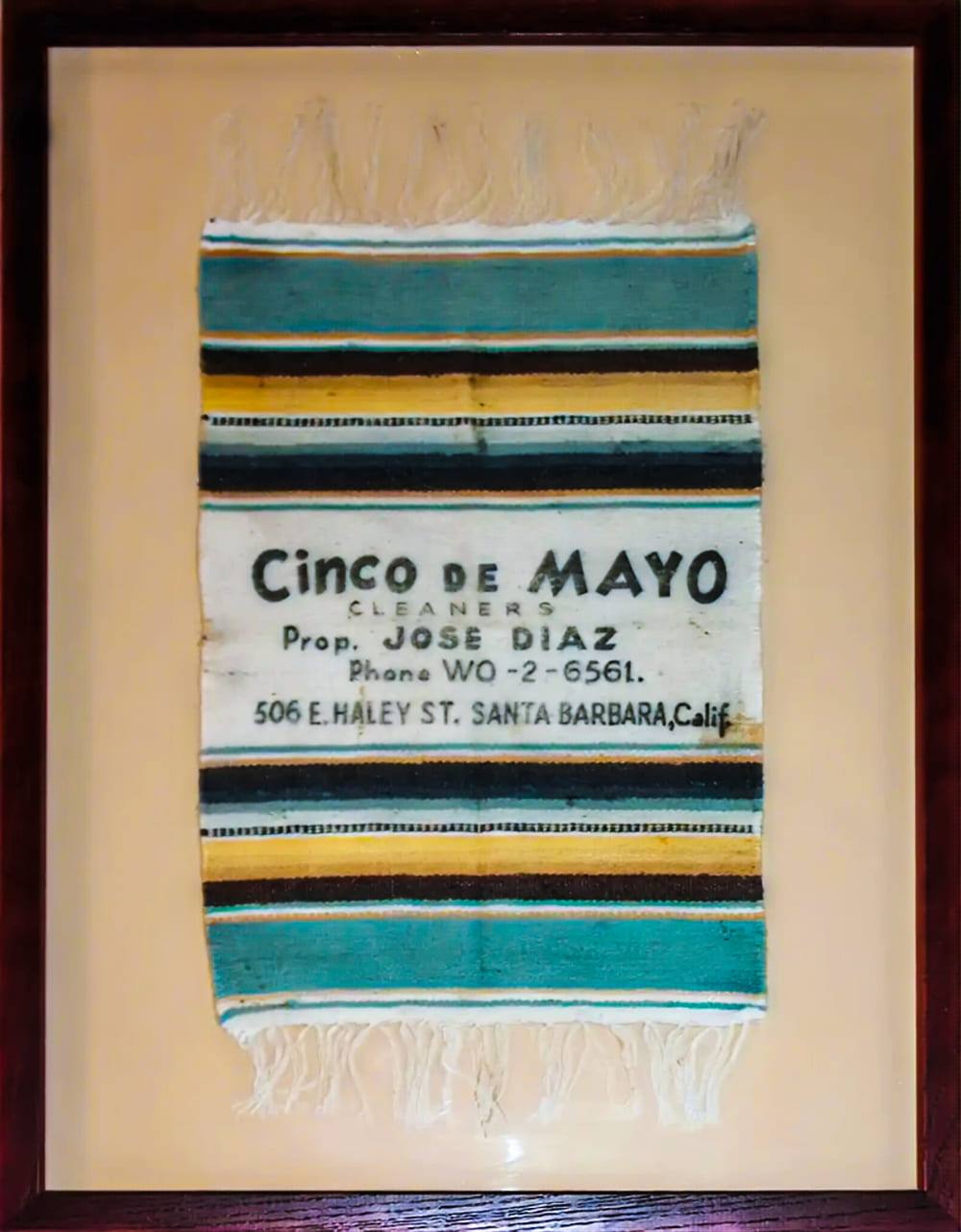
Cinco de Mayo souvenir serape (Courtesy of Mary Robles)
Villareal Market (728 East Haley) operated from 1965 to 1979 under owners Miguel and Mary Lou Romero. This neighborhood grocery market was known for its meat and deli section. There was also hot food that could be bought to go.Businesses like this helped neighborhoods navigate grocery shopping close to home, allowing them to shop locally instead of going to supermarkets. The store is still operating in much the same way as when it started.
El Disco de Oro (806 East Haley Street) which operated from the 1960s to the 1970s. This popular music store and newsstand sold Spanish-language newspapers and magazines, including the popular La Opinion, the Spanish-language daily based in Los Angeles. Mexican music sold as 45s and LPs. This was a business that Latinos liked to drop by, both to browse and to visit with each other.
Lee & Sons Plumbing and Heating (806 East Haley) has operated from 1959 to the present. This family-owned business was started in 1959 by Lee Mendoza, a decorated veteran of World War II who received the Bronze Star and Purple Heart. Lee’s son, Rick Mendoza, took the helm after returning from serving his country in the U.S. Army during the Vietnam War in 1968. Veteran-owned and family-operated, the business is still going strong under the current generation of the Mendoza family.
Milpas Street
El Tapatio Panaderia (426 North Milpas) operated with great success from about 1960 through the 1980s.
Nearer the intersection of Haley and State Street were some other remembered landmarks, including:
El Patio Menswear (619 State Street) operated from around 1950 through the 1970s. It sold men’s workwear, such as jeans, boots, and jackets. Its clients were mainly men who worked outdoor jobs in fields and construction.
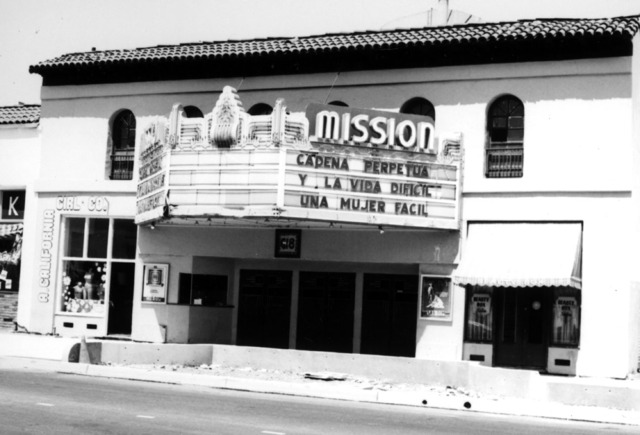
Mission Theater (Courtesy of Mary Robles)
Mission Theater (618 State Street) operated from the 1950s to the 1980s. It was owned jointly by Antonio Molina, Dr. Michael Lemus and Richard Hidalgo. The theater offered a range of entertainment, featuring exclusively Spanish-language films on Sundays. It also hosted live shows from Mexico once a month. It was inexpensive and family-oriented, catering to working families as well as Mexican farmworkers who came to Santa Barbara on the Bracero program.
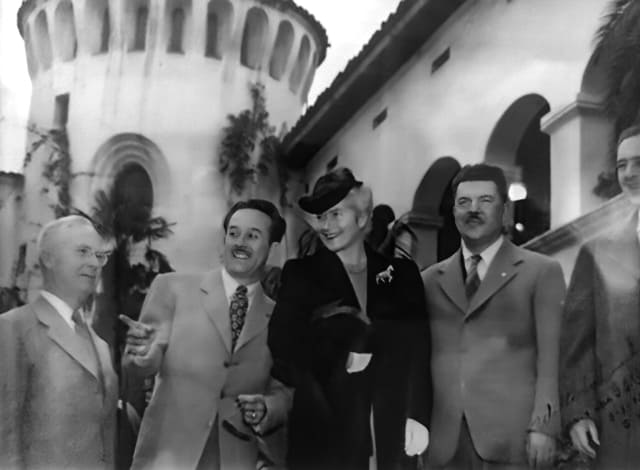
Pedro Infante, Mexican movie-star (Courtesy of Mary Robles)
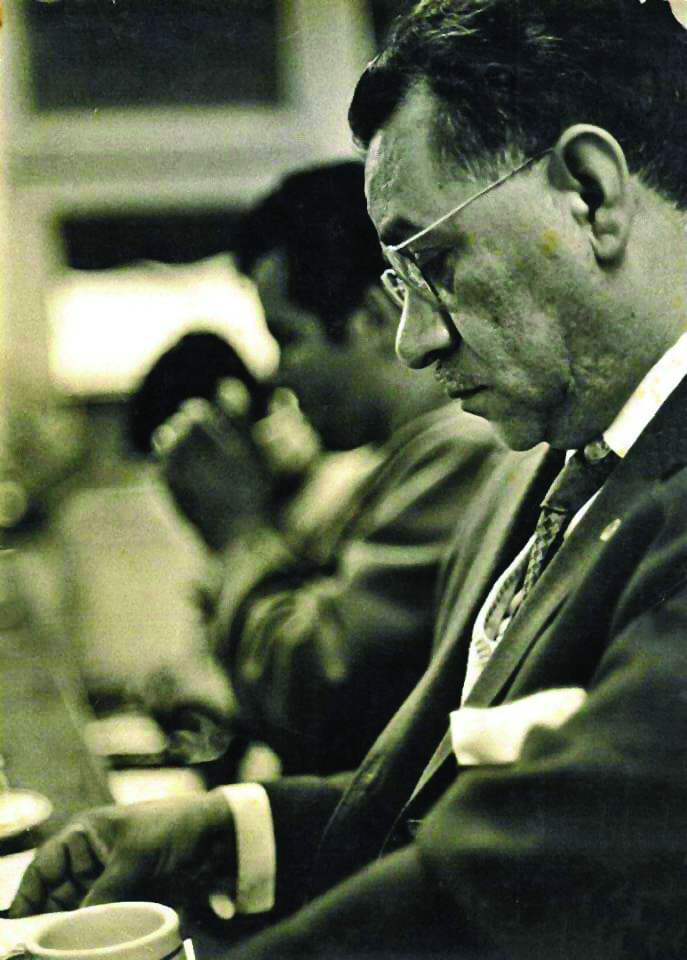
Antonio Molina (Courtesy of Mary Robles)
La Hora Mexican Radio Station (KTMS) broadcast from a studio at De La Guerra Plaza between the 1960s and 1980s. Antonio Molina, co-owner of Mission Theater, hosted a Hispanic music and news show, which received a 30-year Award from the Radio Industry. It was this station that kept Hispanics in Santa Barbara informed and enabled them to participate in all that was on offer in Santa Barbara.
La Paloma (702 Anacapa) operated from 1940 to1983 under the proprietorship of Jennie Luera. This traditional Mexican restaurant was family-run and the property is still owned by Jennie Luera’s granddaughter, Josie Reynoso. The property had been purchased for $7,000 in1939. Its excellent food and family workers made it a successful business. The original mural of its namesake, a horse called La Paloma, can still be seen on the wall at 702 Anacapa Street.
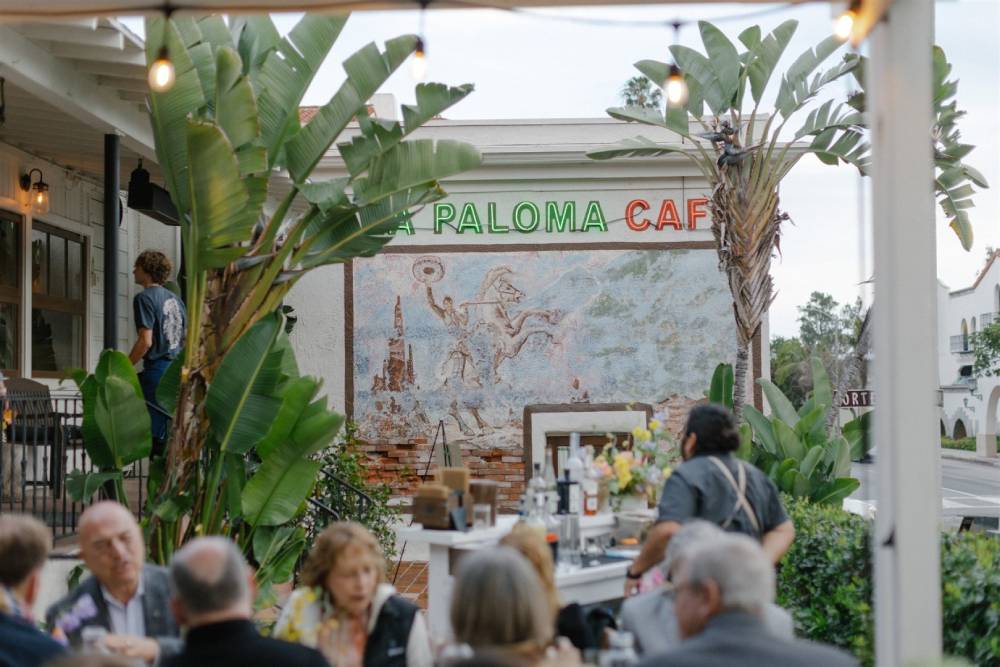
La Paloma Cafe (Courtesy of Mary Robles)