Kathy Cota
Choreographer, Dancer and Teacher
by Teri-Ann Gonzalez

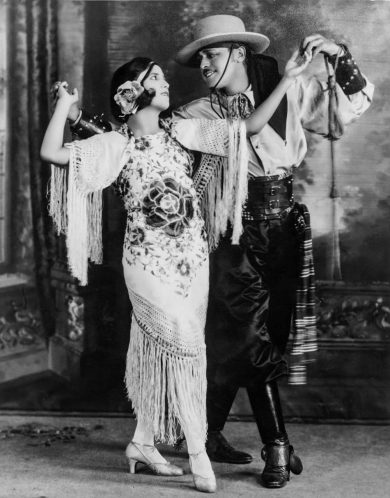
Juan Cota and his sister, Anita Cota, ca. 1920s-30s (Courtesy Teri-Ann Gonzalez)
Kathy Cota, who passed away on June 24, 2024, was well-known and beloved throughout Santa Barbara and surrounding communities as a highly talented, expressive and innovative dancer who mentored generations of girls and young women as the director of Kathy Cota Dance Studio. She and her dance students regularly performed at the city’s annual “Old Spanish Days” Fiesta. As a dedicated teacher, she championed dance training that embraced a variety of styles and interpretations, but always served as a way of forming joyful communities among the young dancers.
Kathleen Susan Cota was born in Santa Barbara on June 5, 1941, the twelfth child of Juan Ignacio and Elfina (Gutierrez) Cota. An 8th generation Santa Barbaran, Kathy traced descent to the early Presidio soldiers, including Juan Francisco Ortega on her mother’s side, as well as through the mixed-race (Chumash, Mexican, Spanish) community of Californios. Her first teacher was her father, Juan. While employed as a custodian and maintenance worker for much of his life, Juan gained early notoriety as a dancer, teacher and choreographer, having performed in the first city-sponsored Old Spanish Days Fiesta in 1924.
Previously, fiestas had been regularly held as neighborhood or family affairs by the Californios. It was only in 1924, as part of the effort by the city’s cultural elites and civic leaders to promote the city’s Spanish roots, that the first city-wide fiesta, dubbed Old Spanish Days Fiesta, was inaugurated. Although the history of the city-wide Fiesta has received much scrutiny, including critiques from Mexican-descended and Indigenous communities for its skewed portrayal of the region’s past, it did offer opportunities for dancers like Juan Cota and the descendants whom he trained to be recognized for their artistry and to grow as teachers, choreographers and performers. Kathy carried on the family’s tradition as a dance teacher and performer.

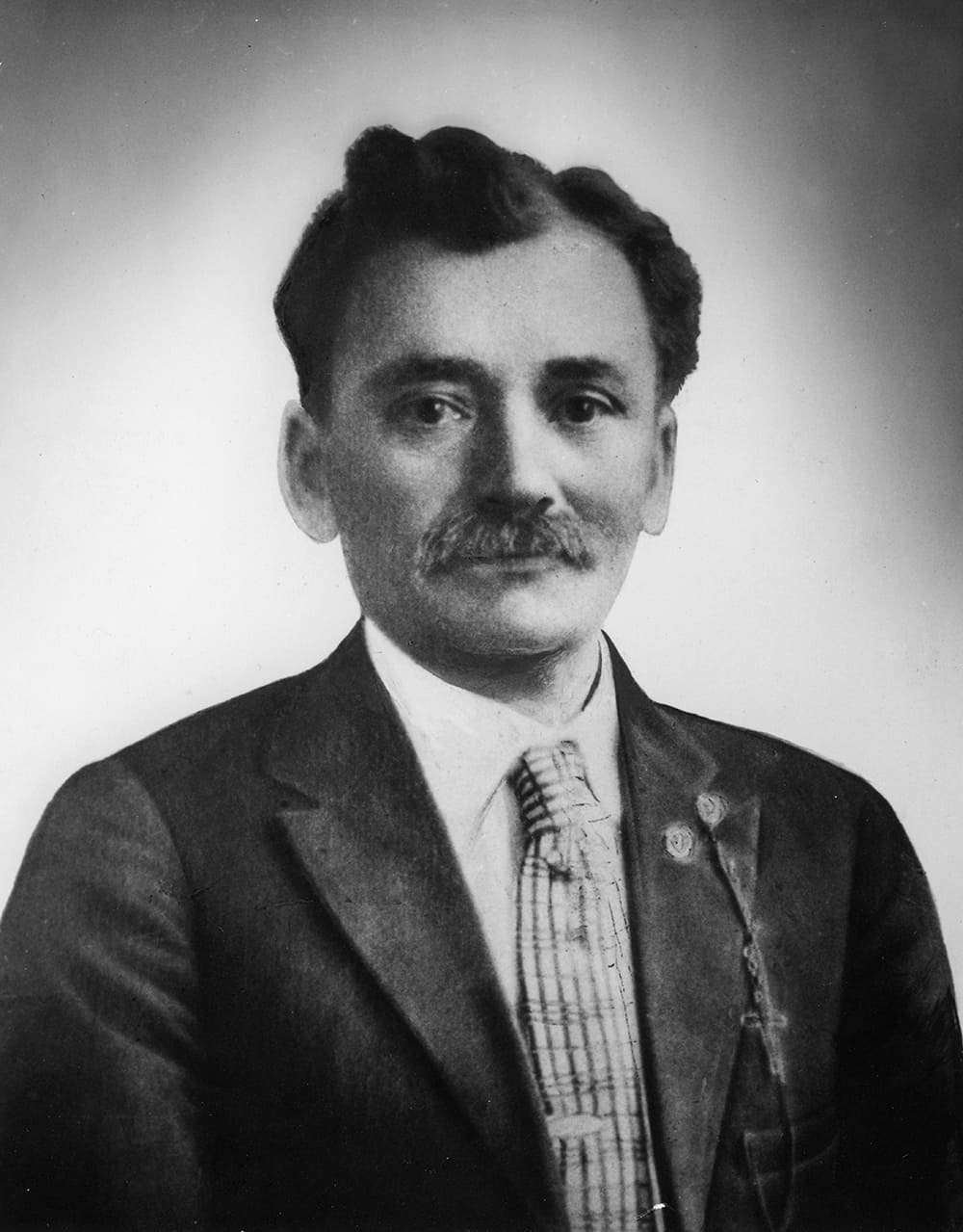
Franciso Cota, Juan Cota’s father, ca. 1880-1915 (Courtesy Teri-Ann Gonzalez)
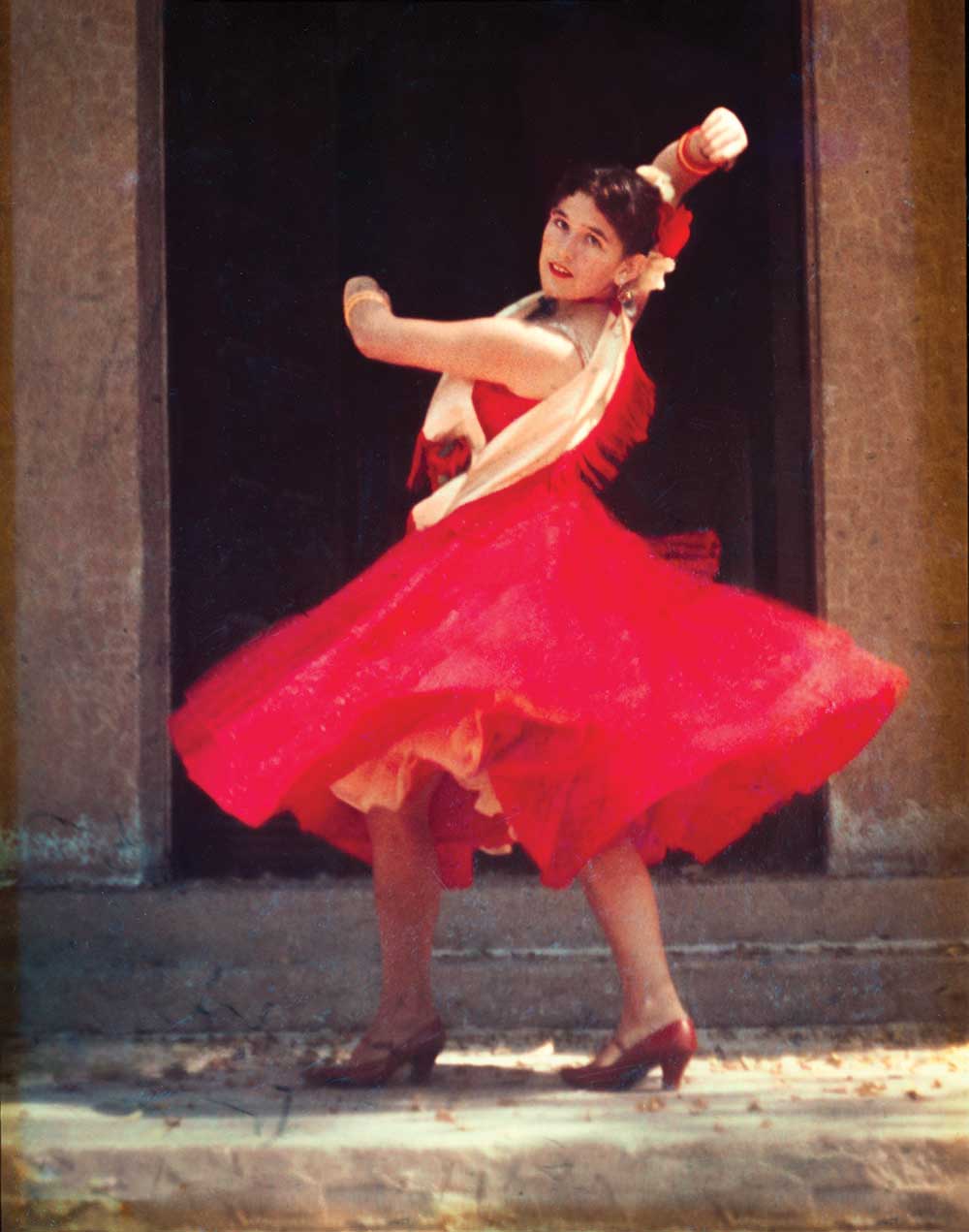
Kathy Cota, aged 16, dancing during Fiesta, 1957. Her costume was likely designed and produced by José Manero. (Courtesy Teri-Ann Gonzalez(
Besides the training from her father, Kathy also received instruction from the renowned José Manero in whose studio students were exposed to various styles, from folkloric to the Spanish paso doble.
She preserved the diversity of styles in her own studio, while also innovating on them as she prepared young dancers to take the stage in the city’s Fiestas.
Kathy married Ramond Lopez in 1965, at the age of 23, but the couple divorced 5 years later. Kathy and her children moved into a duplex on Santa Barbara’s west side, which they shared with Juan and Elfina. Kathy’s renown as a choreographer, dancer and teacher grew, with her eventually creating her own studio, Kathy Cota Studio, which over the decades trained many Fiesta dancers.

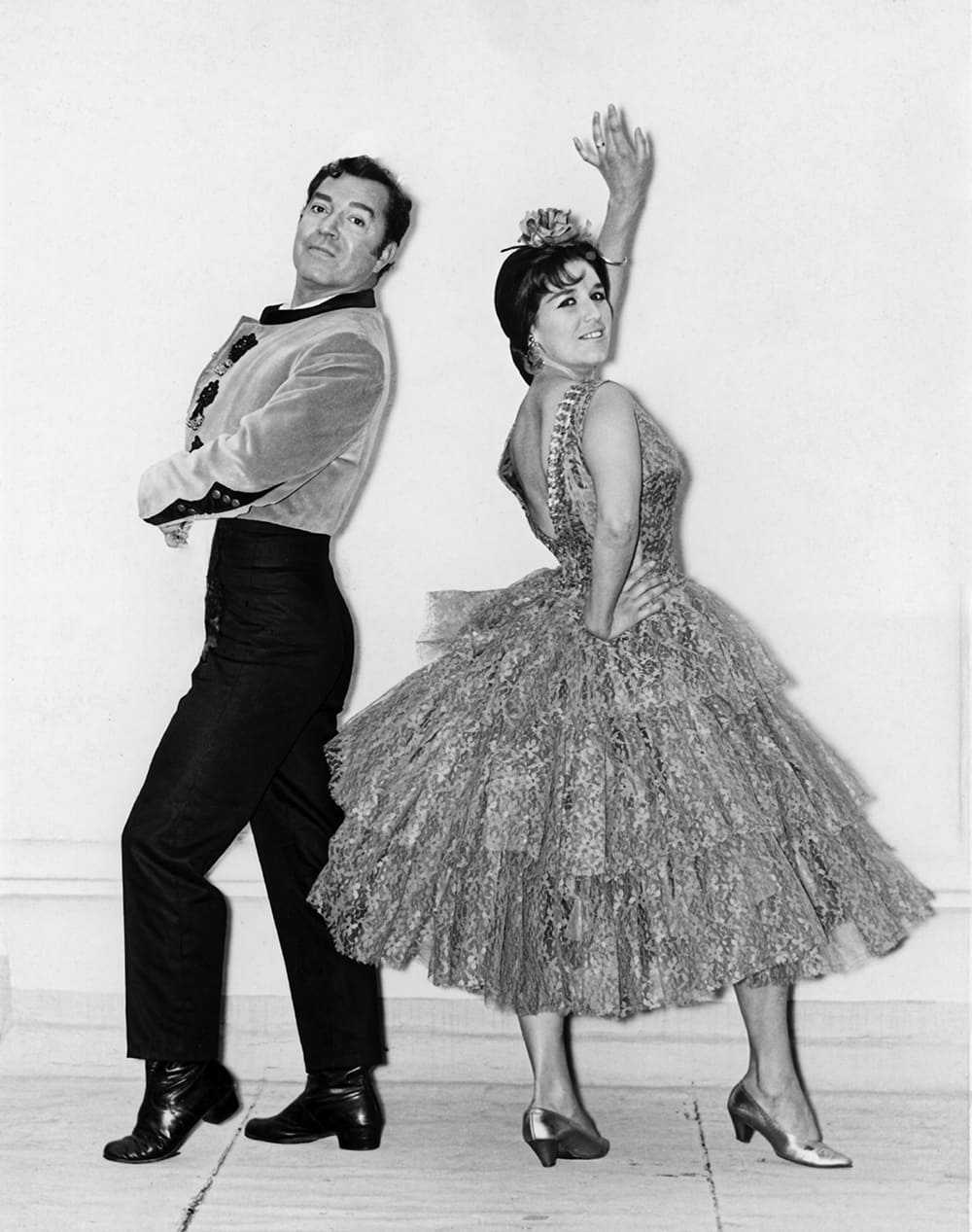
Kathy Cota and José Manero, studio portrait (Courtesy Teri-Ann Gonzalez)
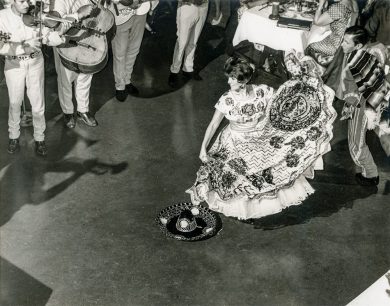
Kathy Cota and dance partner, Richard Mendoza (Courtesy Teri-Ann Gonzalez)
Her daughter, Teri-Ann, who began her own training in dance at 3 years of age under her mother’s direction, inherited a love of dance from Kathy. She has continued Kathy’s legacy by training students, including her own daughter, Cheri-Ann Leon. The family now operates Danza de Cota studio. Kathy’s discipline, artistry and love continue to inspire her daughter, granddaughter and the generations of dancers that she taught and among whom she nurtured dance’s capacity for community-building and its embrace of diverse styles and interpretations. Teri-Ann remembers her mother’s admonition to “keep dancing in the feet not the head. If the dance is in the feet, then the heart is open to your feet.” By claiming dance in all its diversity, Kathy’s family proudly affirms their descent from the region’s Spanish settlers, its Indigenous Chumash inhabitants, and later waves of Mexican migrants. This mix of traditions is mirrored in the range of traditions and practices that many recognize in Santa Barbara’s Fiesta and have sought to highlight and embrace. For Teri-Ann, it’s these complex skeins of dance tradition that form the basis for its innovations and for the camaraderie that is the true spirit of Fiesta.
Sources
Camarillo, Albert. 1996 [1979]. Chicanos in a Changing Society. Stanford University Press. Pp. 60, 64-64, 105, 150.
Leon, Cheri-Ann. ‘We Were Fiesta’ – A Love Letter and Reckoning with What’s Been Lost. Noozhawk. August 2, 2025. https://www.noozhawk.com/cheri-ann-leon-we-were-fiesta-a-love-letter-and-reckoning-with-whats-been-lost/
Smith, Ty Oliver. ‘A Delightful Deception’: The Politics of Public Memory and the Re-creation of Spanish Santa Barbara, 1920-1987. PhD Dissertation. Department of History, UC Santa Barbara. 2014. Pp. 165-175.
State of California. California Marriage Index, 1960-1985. Microfiche. Center for Health Statistics, California Department of Health Services, Sacramento, California. Accessed through Ancestry.com, August 1, 2025.